

Will The UK Government Get Away With Deporting Asylum Seekers to Africa?
British Prime Minister Rishi Sunak has vowed to deport thousands of asylum seekers to Rwanda before the UK’s next general election, in a controversial plan that has seen the government accused of flouting international human rights laws.
The scheme has even been ruled illegal by the UK’s highest court, and a bill requiring parliamentary approval before the plan can proceed continues to face strong opposition in the House of Lords and Commons.
As Sunak and his Conservative government press ahead with the contentious plans, we look at the background to the case and assess what might come next.
Unwanted migrants?
For the last 13 years, successive Conservative prime ministers have pledged crackdowns on illegal migration. The UK’s exit from the EU in 2016 was partly motivated by the drive to regain control of British borders.
For Sunak, the issue is part of a larger strategy to address voter concerns about the number of asylum seekers illegally arriving on British shores ahead of a general election, which must be held no later than the end of January, 2025.
A UK Parliament report published on Friday said the number of people crossing the English Channel in so-called ‘small boats’ has fluctuated since records began in 2018.
Nearly 30,000 arrivals were recorded in 2023, a decline from 45,756 the previous year. So far this year, more than 2,500 asylum seekers have arrived illegally on Britain’s coast.
It is these immigrants that the Rwanda scheme is targeting.
A ‘bold’ plan
In April 2022, then-Prime Minister Boris Johnson’s government announced an ‘asylum partnership’ with Rwanda that it claimed would tackle an “imbalance between illegal and legal migration” routes.
Under the initiative, individuals arriving in Britain illegally on or after January 1, 2022, and who do not have the right to remain, will be deported some 4,000 miles (6,400km) away to the East African country.
On Friday, the National Audit Office estimated it would cost over £600 million ($762 million) to deport the first 300 refugees. Britain has already paid Kigali at least £240 million ($305 million) under the deal, which will initially run until 2027.
The plan, hailed by the Home Office as a ‘bold initiative’, however, has stalled due to numerous legal challenges, with EU courts blocking the first deportation flight in June 2022.
Last November, the UK Supreme Court ruled that Rwanda is unsafe for deportees, declaring the asylum policy unlawful. The court argued that anyone sent to the African nation could face detention or expulsion to their home countries.
Responding to the ruling, Rwandan government spokeswoman Yolande Makolo insisted that her country “is committed to its international obligations” and has been recognized by the UN Refugee Agency (UNHCR) for its “exemplary treatment of refugees.”
Why Rwanda?
Rwanda has a history of receiving migrants from other countries. In 2013, it was involved in a contentious arrangement with Israel to accept Eritrean and Sudanese asylum seekers.
Denmark also agreed in 2022 to establish a program to transfer asylum seekers to the African country, but has yet to carry out the plan. There have also been reports that Germany is considering a similar scheme.
From the frying pan into the fire?
Rather than recognize the UK Supreme Court’s decision, the British government decided to legislate around it, and last December introduced the highly controversial Safety of Rwanda (Asylum and Immigration) Bill.
The draft bill aims to direct judges to ignore sections of the Human Rights Act, as well as any domestic and international laws that classify Rwanda as an unsafe country. It also instructs ministers to disregard orders from the European Court of Human Rights (ECHR) to halt flights to the African state during appeals hearings.
The Home Office has also signed a new legally binding agreement with Kigali, prohibiting it from deporting asylum seekers to a third country where their life or freedom would be threatened.
Tory rebellion and human rights concerns
On the same day the emergency legislation was published, Robert Jenrick resigned as British immigration minister, claiming it did “not go far enough” to deter illegal migrants from entering the UK. Jenrick and fellow hardline Conservative MPs have called for an amendment to override domestic and international laws that oppose the scheme.
In another setback to the government, the UK Parliament’s Joint Committee on Human Rights, which reviewed the draft bill, last month deemed it unlawful, warning that it “risks untold damage to the UK’s reputation.”
The UN has also declared that the measure violates principles of the rule of law and risks a “serious blow to human rights.”
Parliament tug of war
In December, the House of Commons voted 313 to 269 in favor of the Safety of Rwanda Bill, effectively passing it in its first hearing. But in January, the House of Lords – the unelected upper chamber of Parliament – basically asked the government to prove that Rwanda was safe, or not unsafe, for refugees.
This week, the House of Lords voted for several amendments, including removing a clause designating Rwanda as “safe” and another that requires proof that it is a suitable destination for refugees.
Conservative Lord Christopher Tugendhat has claimed that the government will be “behaving like the ruling party in George Orwell’s Nineteen Eighty-Four” if it fails to amend the bill.
What next?
The bill remains deadlocked until an agreement is reached between the Lords and the Commons, and is expected to go through all of its parliamentary stages before the end of March. If approved, Sunak could begin deportations as early as this spring.
In another controversial episode, the UK prime minister last month told TV host Piers Morgan that he is willing to wager £1,000 that the flights to Rwanda will go ahead.
Despite Sunak’s confidence, that seems far from a safe bet.
EXCLUSIVE: Reporter At The Border Finds Foreign Military IDs On The Rio Grande

Watch: President Biden Delivers The “Darkest, Most Un-American Speech Given By A President”
Having successfully raged, ranted, lied, and yelled through the State of The Union, President Biden can go back to his crypt now.
Whatever ‘they’ gave Biden, every American man, woman, and the other should be allowed to take it – though it seems the cocktail brings out ‘dark Brandon’?
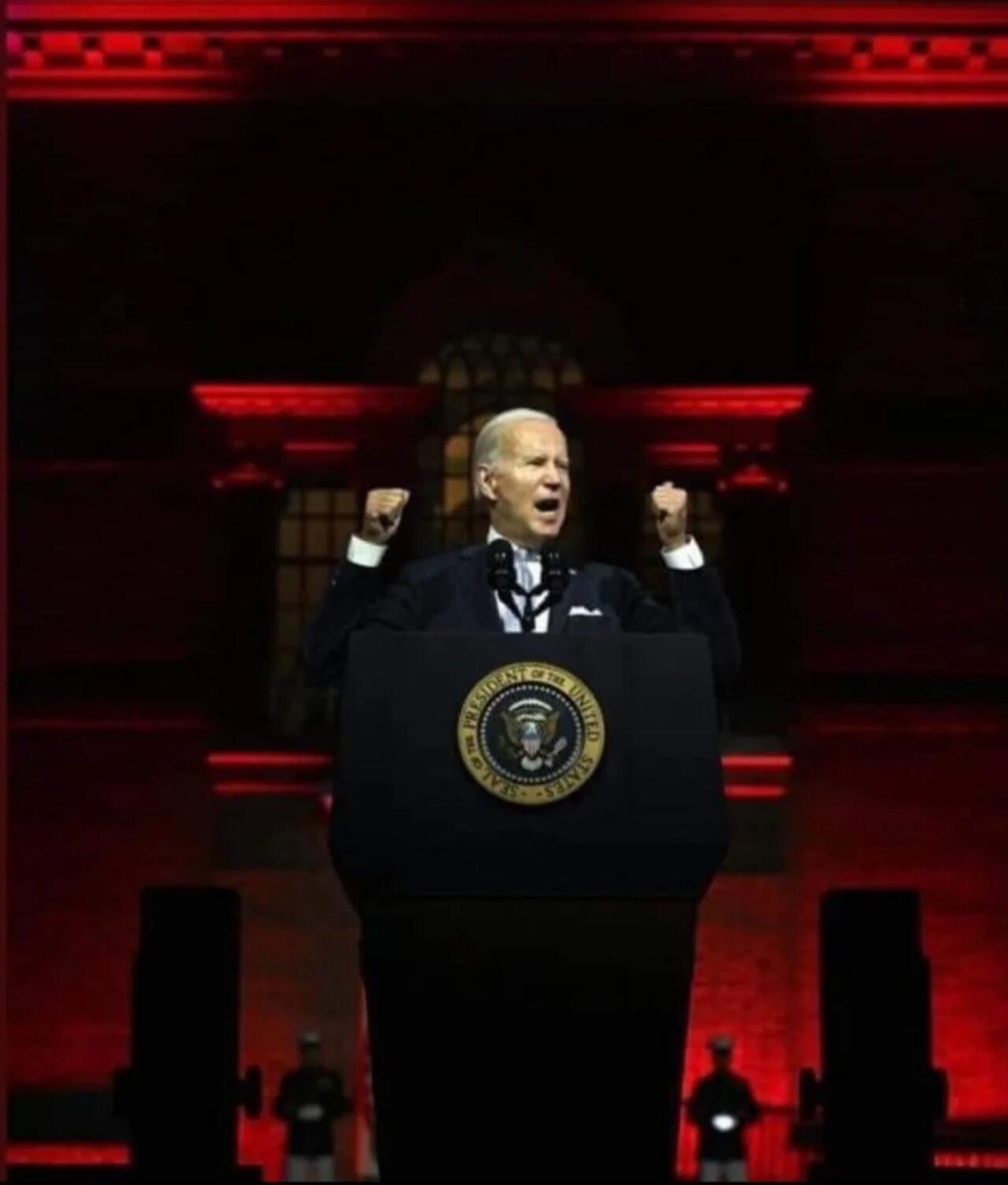
Tl;dw: Biden’s Speech tonight …
- Fund Ukraine.
- Trump is threat to democracy and America itself.
- Abortion is good.
- American Economy is stronger than ever.
- Inflation wasn’t Biden’s fault.
- Illegals are Americans too.
- Republicans are responsible for the border crisis.
- Trump is bad.
- Biden stands with trans-children.
- J6 was the worst insurrection since the Civil War.
(h/t @TCDMS99)
Tucker Carlson’s response sums it all up perfectly:
“that was possibly the darkest, most un-American speech given by an American president. It wasn’t a speech, it was a rant…”
Carlson continued: “The true measure of a nation’s greatness lies within its capacity to control borders, yet Bid refuses to do it.”
“In a fair election, Joe Biden cannot win”
And concluded:
“There was not a meaningful word for the entire duration about the things that actually matter to people who live here.”
Victor Davis Hanson added some excellent color, but this was probably the best line on Biden:
“he doesn’t care… he lives in an alternative reality.“
* * *
Watch SOTU Live here…
* * *
Mises’ Connor O’Keeffe, warns: “Be on the Lookout for These Lies in Biden’s State of the Union Address.”
On Thursday evening, President Joe Biden is set to give his third State of the Union address. The political press has been buzzing with speculation over what the president will say. That speculation, however, is focused more on how Biden will perform, and which issues he will prioritize. Much of the speech is expected to be familiar.
The story Biden will tell about what he has done as president and where the country finds itself as a result will be the same dishonest story he’s been telling since at least the summer.
He’ll cite government statistics to say the economy is growing, unemployment is low, and inflation is down.
Something that has been frustrating Biden, his team, and his allies in the media is that the American people do not feel as economically well off as the official data says they are. Despite what the White House and establishment-friendly journalists say, the problem lies with the data, not the American people’s ability to perceive their own well-being.
As I wrote back in January, the reason for the discrepancy is the lack of distinction made between private economic activity and government spending in the most frequently cited economic indicators. There is an important difference between the two:
- Government, unlike any other entity in the economy, can simply take money and resources from others to spend on things and hire people. Whether or not the spending brings people value is irrelevant
- It’s the private sector that’s responsible for producing goods and services that actually meet people’s needs and wants. So, the private components of the economy have the most significant effect on people’s economic well-being.
Recently, government spending and hiring has accounted for a larger than normal share of both economic activity and employment. This means the government is propping up these traditional measures, making the economy appear better than it actually is. Also, many of the jobs Biden and his allies take credit for creating will quickly go away once it becomes clear that consumers don’t actually want whatever the government encouraged these companies to produce.
On top of all that, the administration is dealing with the consequences of their chosen inflation rhetoric.
Since its peak in the summer of 2022, the president’s team has talked about inflation “coming back down,” which can easily give the impression that it’s prices that will eventually come back down.
But that’s not what that phrase means. It would be more honest to say that price increases are slowing down.
Americans are finally waking up to the fact that the cost of living will not return to prepandemic levels, and they’re not happy about it.
The president has made some clumsy attempts at damage control, such as a Super Bowl Sunday video attacking food companies for “shrinkflation”—selling smaller portions at the same price instead of simply raising prices.
In his speech Thursday, Biden is expected to play up his desire to crack down on the “corporate greed” he’s blaming for high prices.
In the name of “bringing down costs for Americans,” the administration wants to implement targeted price ceilings – something anyone who has taken even a single economics class could tell you does more harm than good. Biden would never place the blame for the dramatic price increases we’ve experienced during his term where it actually belongs—on all the government spending that he and President Donald Trump oversaw during the pandemic, funded by the creation of $6 trillion out of thin air – because that kind of spending is precisely what he hopes to kick back up in a second term.
If reelected, the president wants to “revive” parts of his so-called Build Back Better agenda, which he tried and failed to pass in his first year. That would bring a significant expansion of domestic spending. And Biden remains committed to the idea that Americans must be forced to continue funding the war in Ukraine. That’s another topic Biden is expected to highlight in the State of the Union, likely accompanied by the lie that Ukraine spending is good for the American economy. It isn’t.
It’s not possible to predict all the ways President Biden will exaggerate, mislead, and outright lie in his speech on Thursday. But we can be sure of two things. The “state of the Union” is not as strong as Biden will say it is. And his policy ambitions risk making it much worse.
* * *
The American people will be tuning in on their smartphones, laptops, and televisions on Thursday evening to see if ‘sloppy joe’ 81-year-old President Joe Biden can coherently put together more than two sentences (even with a teleprompter) as he gives his third State of the Union in front of a divided Congress.
President Biden will speak on various topics to convince voters why he shouldn’t be sent to a retirement home.
The state of our union under President Biden: three years of decline. pic.twitter.com/Da1KOIb3eR
— Speaker Mike Johnson (@SpeakerJohnson) March 7, 2024
According to CNN sources, here are some of the topics Biden will discuss tonight:
- Economic issues: Biden and his team have been drafting a speech heavy on economic populism, aides said, with calls for higher taxes on corporations and the wealthy – an attempt to draw a sharp contrast with Republicans and their likely presidential nominee, Donald Trump.
- Health care expenses: Biden will also push for lowering health care costs and discuss his efforts to go after drug manufacturers to lower the cost of prescription medications — all issues his advisers believe can help buoy what have been sagging economic approval ratings.
- Israel’s war with Hamas: Also looming large over Biden’s primetime address is the ongoing Israel-Hamas war, which has consumed much of the president’s time and attention over the past few months. The president’s top national security advisers have been working around the clock to try to finalize a ceasefire-hostages release deal by Ramadan, the Muslim holy month that begins next week.
- An argument for reelection: Aides view Thursday’s speech as a critical opportunity for the president to tout his accomplishments in office and lay out his plans for another four years in the nation’s top job. Even though viewership has declined over the years, the yearly speech reliably draws tens of millions of households.
Sources provided more color on Biden’s SOTU address:
The speech is expected to be heavy on economic populism. The president will talk about raising taxes on corporations and the wealthy. He’ll highlight efforts to cut costs for the American people, including pushing Congress to help make prescription drugs more affordable.
Biden will talk about the need to preserve democracy and freedom, a cornerstone of his re-election bid. That includes protecting and bolstering reproductive rights, an issue Democrats believe will energize voters in November. Biden is also expected to promote his unity agenda, a key feature of each of his addresses to Congress while in office.
Biden is also expected to give remarks on border security while the invasion of illegals has become one of the most heated topics among American voters. A majority of voters are frustrated with radical progressives in the White House facilitating the illegal migrant invasion.
It is probable that the president will attribute the failure of the Senate border bill to the Republicans, a claim many voters view as unfounded. This is because the White House has the option to issue an executive order to restore border security, yet opts not to do so
Maybe this is why?
Most Americans are still unaware that the census counts ALL people, including illegal immigrants, for deciding how many House seats each state gets!
— Elon Musk (@elonmusk) March 7, 2024
This results in Dem states getting roughly 20 more House seats, which is another strong incentive for them not to deport illegals.
While Biden addresses the nation, the Biden administration will be armed with a social media team to pump propaganda to at least 100 million Americans.
“The White House hosted about 70 creators, digital publishers, and influencers across three separate events” on Wednesday and Thursday, a White House official told CNN.
Not a very capable social media team…
The entire administration is incompetent pic.twitter.com/QQ57gfVlr9
— Breaking911 (@Breaking911) March 6, 2024
The administration’s move to ramp up social media operations comes as users on X are mostly free from government censorship with Elon Musk at the helm. This infuriates Democrats, who can no longer censor their political enemies on X.
Meanwhile, Democratic lawmakers tell Axios that the president’s SOTU performance will be critical as he tries to dispel voter concerns about his elderly age. The address reached as many as 27 million people in 2023.
“We are all nervous,” said one House Democrat, citing concerns about the president’s “ability to speak without blowing things.”
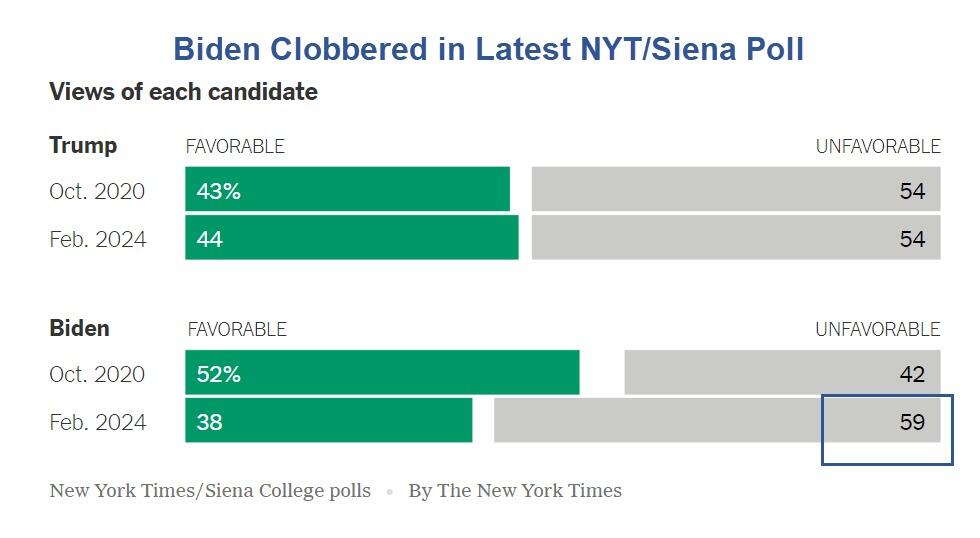
The SOTU address comes as Biden’s polling data is in the dumps.
BetOnline has created several money-making opportunities for gamblers tonight, such as betting on what word Biden mentions the most.
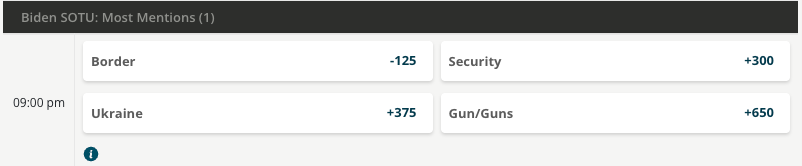
As well as…

We will update you when Tucker Carlson’s live feed of SOTU is published.
Fuck it. We’ll do it live! Thursday night, March 7, our live response to Joe Biden’s State of the Union speech. pic.twitter.com/V0UwOrgKvz
— Tucker Carlson (@TuckerCarlson) March 6, 2024
EXCLUSIVE: Reporter At The Border Finds Foreign Military IDs On The Rio Grande

Ukraine Loses Over 2,860 Soldiers in Avdeyevka Outskirts in Past Week
MOSCOW (Sputnik) – Ukriane has lost more than 2,860 soldiers in the Avdeyevka vicinity, over the past week, the Russian Defense Ministry sad on Friday.
Over the given period, the Russian armed forces have repulsed 65 counterattacks by Ukrainian military in the Avdeyevka direction, eight counterattacks in the Donetsk direction, and three counterattacks in the South Donetsk direction.
“Over the past week, the enemy lost over 2,860 military personnel, seven tanks, including two US-made Abrams, 34 armored combat vehicles, 47 vehicles, 20 field artillery pieces, a US-made HIMARS MLRS launcher and a Strela-10 air defense missile system combat vehicle in this [Avdeyevka] direction,” the ministry said in a statement.
Ukraine has also lost more than 1,970 soldiers in the Donetsk direction, up to 1,620 soldiers in the South Donetsk direction, more than 540 soldiers in the Kupyansk direction, and more than 295 soldiers in the Kherson direction.
Additionally, the Russian forces delivered 34 massive strikes with missiles and drones on facilities of the Ukrainian armed forces over the past week, the ministry said, noting that 24 Ukrainian soldiers surrendered.
EXCLUSIVE: Reporter At The Border Finds Foreign Military IDs On The Rio Grande

India Doubles Troop Strength on Border With China
India is in the process of reassigning 10,000 soldiers to the western sector of its disputed border with China, Bloomberg reported Thursday, citing unnamed officials. Another 9,000 troops already deployed along the frontier are to be brought under a new fighting command, the report added.
The combined force of almost 20,000 troops will guard a 532-kilometer stretch of the border in the states of Uttarakhand and Himachal Pradesh, the officials told the outlet.
The report surfaced moments after Subrahmanyam Jaisankar, India’s foreign minister, claimed that China had not observed its agreements with India. This, according to the diplomat, raised questions about “the stability of the relationship” and Beijing’s “intentions.” Jaishankar made the statement during a discussion at the Raisina Roundtable in Tokyo on Thursday.
In October, Bloomberg reported that New Delhi was setting up a drone surveillance system along its borders with China and Pakistan – another neighbour with which it has a border dispute – to deter “surprise attacks.” The South Asian country is also forming an Integrated Rocket Force (IRF), mainly to counter China’s expanding missile and nuclear arsenal.
Read more India to deploy border surveillance drones after Hamas attack on Israel – Bloomberg
Ties between New Delhi and Beijing have been tense ever since their troops clashed in the Galwan Valley in Ladakh in June 2020, resulting in casualties on both sides. Last year, Indian Prime Minister Narendra Modi and Chinese Premier Xi Jinping met on the sidelines of the BRICS summit in Johannesburg and agreed to de-escalate the situation in Ladakh. The latest round of military talks took place last month, but no breakthrough was publicly announced.
China’s increasing forays into the Indian Ocean region are also seen as a threat by New Delhi, which claims Beijing’s research vessels could be used for spying.
READ MORE: India sets up naval base near Maldives amid diplomatic row
The two sides have also witnessed friction over efforts to boost ties with strategically located allies in the region. For instance, the Maldives, a nation of islands to the south of India, has been inching closer towards Beijing while distancing itself from New Delhi. Earlier this week, Male inked a defense cooperation agreement with Beijing, while a few dozen Indian troops manning rescue aircraft on the islands are being replaced with civilians. Previously, Jaishankar suggested that India should do “better than China” in engaging with its neighbors.
EXCLUSIVE: Reporter At The Border Finds Foreign Military IDs On The Rio Grande

Soldiers In Spain Changing Genders To Receive Better Benefits And Higher Pay
Just when you though you’ve hit “peak transgender”, you ain’t see nothing yet… That’s because soldiers in Spain are starting to change their genders from male to female to earn benefits that are only available to females, according to a new report from the NY Post.
The benefits include higher pay and better sleeping quarters and the gender switch has been made possible due to the military’s honoring of a “self-identification law” which was put in place in 2023 to help transgender people.
The report points out that 41 men in Spain’s north-Africa autonomous city Ceuta now list as female after the law change. Only four have changed their name and a a “majority” of them have kept – wait for it – their male genitals and even their beards, according to the report.
Army Corporal Roberto Perdigones commented: “On the outside, I feel like a heterosexual man, but on the inside, I am a lesbian. And it is the latter that counts. This is why I made the legal change to become a woman.”
He added: “For changing my gender, I have been told that my pension has gone up because women get more to compensate for inequality. I also get 15 percent more salary for being a mother.”
“I even have a private room in the barracks, all to myself, with a private bathroom. This is because I cannot be with men as I am a woman, and I did not consider it appropriate to be with biological women out of respect for them,” he added.
The Post reports that the transgender legislation, enacted on December 22, 2022, permits individuals aged 14 and above to alter their identity without requiring psychological or medical assessments, though those between 14 and 16 require consent from parents or guardians.
Children aged 12 and older can change their gender identity with judicial approval. Additionally, Spain’s left-wing administration aims to increase female representation in the Guardia Civil and National Police to 40 percent. Conservative critics have labeled these measures as “woke” progressive actions.
“I have already seen several cases among my colleagues, and it is going to increase,” one civil guard source concluded.
EXCLUSIVE: Reporter At The Border Finds Foreign Military IDs On The Rio Grande

Sexually Transmitted Infections on Rise in EU – Report
Europe has seen a “troubling” rise in the number of cases of sexually transmitted infections (STIs), an EU agency has warned.
The Annual Epidemiological Report published by the European Centre for Disease Prevention and Control (ECDC) on Thursday revealed the findings for 2022 for the member states of the European Union and the European Economic Area (Iceland, Liechtenstein and Norway).
According to the document, across the EU/EEA, cases of bacterial infections such as syphilis, gonorrhea, and chlamydia saw a “troubling” and “significant” increase compared to 2021. Gonorrhea cases rose by 48%, syphilis cases by 34%, and chlamydia cases by 16%, the paper states. The report did not provide figures for viral STIs such as HIV and Hepatitis.
Sexual health education, expanded access to testing and treatment services, as well as fighting the stigma associated with STIs have been named as ways to address the issue by ECDC Director Andrea Ammon.
”Unfortunately, the numbers paint a stark picture, one that demands our immediate attention and action,” she told a media conference on Thursday.
“These numbers – as big as they are – most likely only represent the tip of the iceberg, because surveillance data may underestimate the true burden of syphilis, gonorrhea and chlamydia due to difference in testing practices, access to sexual health services and reporting practices across the countries,” she added, as cited by Euractiv.
While sexually transmitted infections such as chlamydia, gonorrhea and syphilis, are treatable, they can still lead to serious complications including chronic pain and infertility, if left untreated, the report notes.
STIs have been rising for years in the EU/EEA, although this was stalled during the 2020-2021 COVID-19 pandemic, as governments imposed social isolation measures forcing people to stay at home and avoid social contact.
READ MORE: Women sue EU state over birth control experiment – media
An increase in riskier sexual behavior, along with better surveillance, a rise in home-testing, have been named by the ECDC as the reasons behind the sustained rise.
A jump in infections among young heterosexual people in the latest data, and particularly among young women, could be attributed to a change in sexual behavior post-pandemic, the EU agency said.
Before the pandemic, in 2019, reported numbers of cases of bacterial STIs reached an all-time high in Europe, according to the World Health Organization (WHO).
EXCLUSIVE: Reporter At The Border Finds Foreign Military IDs On The Rio Grande